What Your Cat Would Look Like as a Pre-1900 Historical Figure
The trick is not putting any cat in an old costume. Start with the cat's real posture and expression, then choose a role that makes those traits feel inevitable.
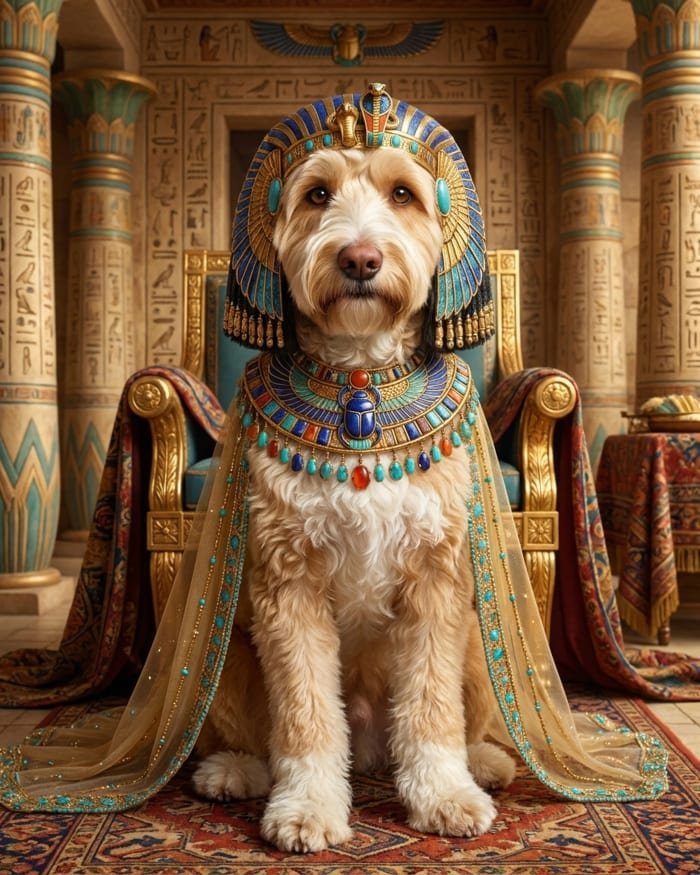
Put a random cat in a ruff and you get a costume. Put your cat in the role their face was already auditioning for and you get a portrait people stop and look at. The difference is entirely in the casting.
Start with the cat, not the century
Watch how they hold themselves for a day. Almost every cat falls into one of a handful of postures, and each has an obvious historical counterpart.
- The loaf, eyes half closed, unbothered → a magistrate, a bishop, a Dutch merchant who has already counted the money. Heavy fabrics, dark background, one hand of light.
- Upright, alert, staring past you → a naval officer or an explorer. Give them a horizon and a high collar.
- Chaotic, caught mid-motion → a duellist, a stage performer, a Romantic poet in disarray. Motion suits them; don't force stillness.
- Small, wide-eyed, permanently startled → an apprentice or a young scholar surrounded by books far too large for them. Comedy through scale.
- Enormous and serene → royalty. Obviously royalty.
Match the era to the coat
This is the trick nobody mentions. A long-haired cat carries volume — Elizabethan collars, powdered-wig eras, anything with silhouette. A sleek short-hair reads better in tailored, austere periods: Regency, Victorian mourning dress, military uniform. Fighting the coat produces the "costume" look; working with it produces a portrait.
Tabby markings behave like patterned fabric, so keep the clothing plainer or the image becomes noisy. Solid black cats are the easiest subjects in history and the hardest to light — ask for a strong rim light or they vanish into the background.
Keep the face honest
The most common mistake is over-styling until the animal is gone. The costume, the lighting and the era are the joke; the cat has to remain recognisably itself for the joke to land. If a friend can't identify your cat in the picture within two seconds, it's gone too far — restart with a plainer setting.
The pre-1900 rule
There's a practical reason this era works so well: portraiture before photography was about status and character rather than likeness. Sitters were painted as they wished to be understood. That is exactly the right register for a cat, an animal that has never once doubted its own importance.